
Punjab WPC Hosted Cross-Provincial Learning Exchange to Strengthen WPCs
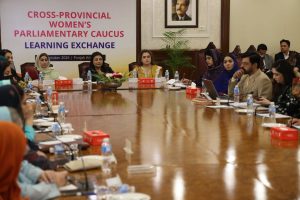
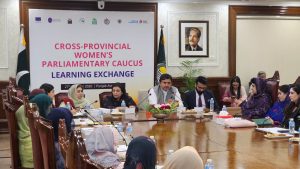
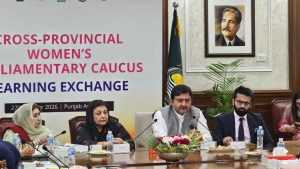
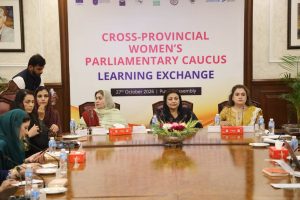
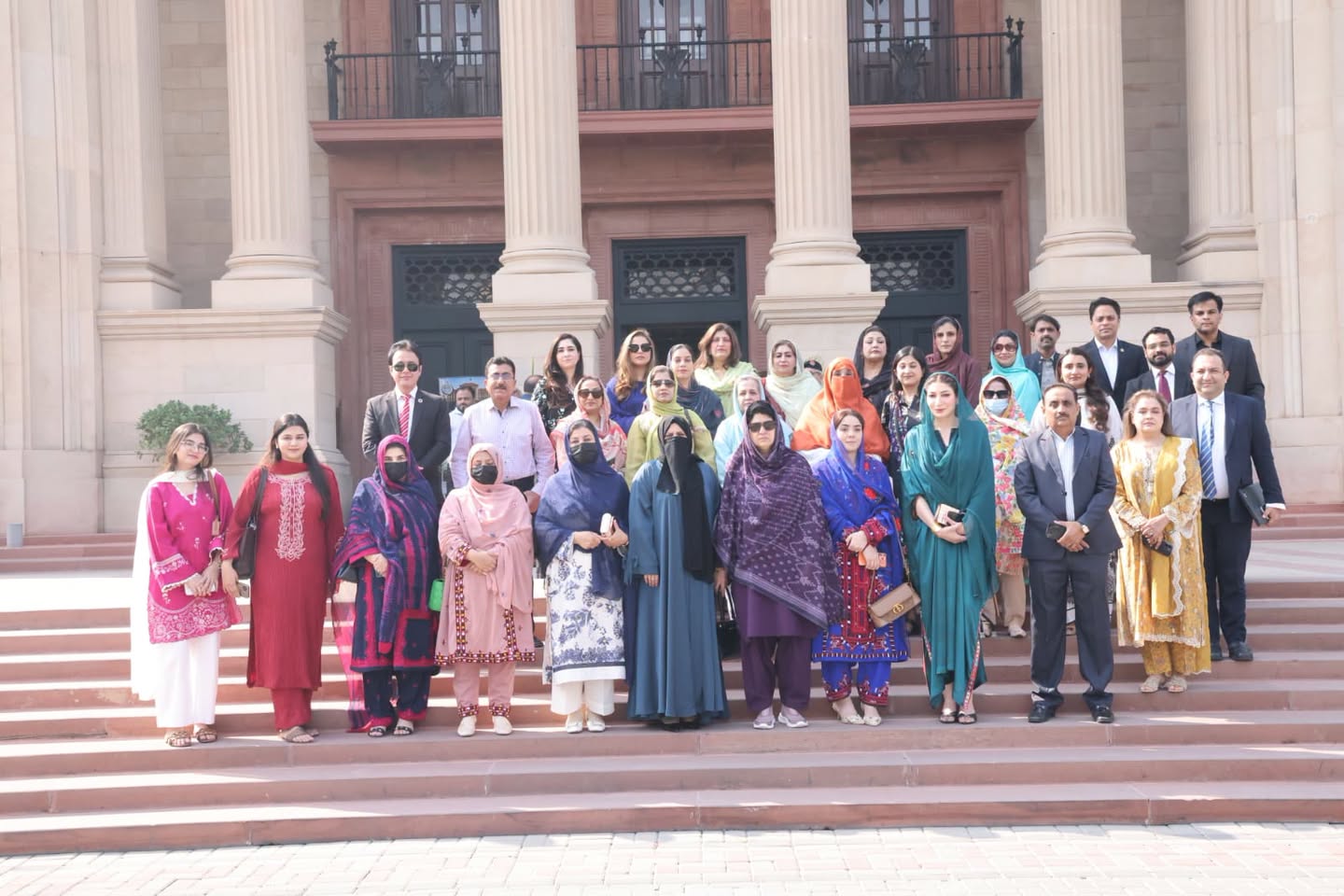
The Provincial Assembly of the Punjab welcomed delegations from the Women’s Parliamentary Caucuses (WPCs) of Balochistan and Sindh, alongside delegations from the National Assembly of Pakistan and UN Women, for a cross-provincial learning exchange aimed at strengthening the institutional role and functioning of Women’s Parliamentary Caucuses across Pakistan.
Organised in collaboration with UN Women under the European Union-funded Pakistan Women Leaders (PWL) Project, the exchange provided a platform for parliamentarians and parliamentary officials to share institutional experiences, discuss procedural frameworks and identify opportunities to strengthen cooperation among national and provincial legislatures.
Begum Ishrat Ashraf, Convener of the Women’s Parliamentary Caucus of the Provincial Assembly of the Punjab, welcomed the visiting delegations and highlighted the importance of inter-provincial cooperation, peer learning and knowledge-sharing in strengthening women’s parliamentary leadership.
During the opening session, Ms. Ghazala Gola, Deputy Speaker of the Balochistan Assembly and Chairperson of the Women’s Parliamentary Caucus of Balochistan, shared her remarks on the importance of strengthening parliamentary caucuses through formal institutional arrangements. Her participation underscored Balochistan’s commitment to learning from the experiences of other assemblies and exploring ways to strengthen the procedural framework governing its Women’s Parliamentary Caucus.
The session titled “Punjab’s Parliamentary Experience: Institutionalizing Parliamentary Caucuses through the Assembly Rules of Procedure” explored the Assembly’s experience of institutionalising parliamentary caucuses through its Rules of Procedure. Members of the visiting delegations had the opportunity to learn about the procedural framework, the process of formally recognising the Women’s Parliamentary Caucus and the institutional arrangements that support its functioning.
Mr. Usama Khawar Ghumman, Advisor to the Speaker and Head of the Parliamentary Development Unit (PDU), Provincial Assembly of the Punjab, presented Punjab’s experience of amending the Assembly’s Rules of Procedure to formally recognise the Women’s Parliamentary Caucus. His presentation elaborated on the amendment process, institutional arrangements, challenges encountered and lessons learned, providing practical insights into the procedural requirements for institutionalising parliamentary caucuses.
The session was particularly relevant to the delegation from Balochistan, which is exploring ways to strengthen its own Rules of Procedure. Learning from Punjab’s experience will help inform the identification of appropriate amendments and institutional arrangements suited to the Balochistan Assembly’s context, supporting efforts to establish a stronger procedural foundation for the functioning of its Women’s Parliamentary Caucus.
The second session, “National and Provincial WPCs in Action: Parliamentary Achievements, Legislative Priorities and Opportunities for Collaboration,” brought together representatives of the National Assembly and provincial caucuses to share their initiatives, achievements, ongoing work and legislative priorities.
Dr. Shahida Rehmani, Secretary of the Women’s Parliamentary Caucus of the National Assembly, shared her remarks during the second session, highlighting the importance of coordination and collaboration among Women’s Parliamentary Caucuses at the national and provincial levels.
MPA Farah Sohail thanked the organizers for providing a platform for women parliamentarians to share experiences and learn best practices. She briefed that WPC Sindh was established on 25 February 2014, with institutional office support since November 2017, and continues to work on its institutional framework, internal rules and procedures, and women-centered legislation. She emphasized that this cross-provincial exchange is an excellent opportunity to learn from each other and strengthen cooperation.
The session also featured a discussion among the women members present on elections and electoral reforms. Participants exchanged views on the mode of elections, the allocation of more general seats for women, and ensuring fair representation of women in parliamentary committees. The discussion provided an opportunity to consider ways to strengthen women’s participation and representation in electoral and parliamentary processes.
The broader discussion provided an opportunity to reflect on shared priorities, exchange experiences and explore avenues for joint initiatives to strengthen women’s participation in parliamentary processes and advance gender-responsive legislation and policymaking.
The exchange also featured a presentation on the Pakistan Women Parliamentary Leaders’ Portal, highlighting its potential to strengthen parliamentary visibility, coordination and knowledge-sharing among women parliamentarians and their caucuses across the country. The Presentation was given by Waqar Ul Shams, Technical Expert, UN Women
Through this initiative UN Women, in collaboration with the European Union-funded Pakistan Women Leaders Project, continues to support institutional strengthening, peer learning and coordination among women parliamentarians and parliamentary caucuses in Pakistan.
The engagement reaffirmed the importance of inter-assembly learning in promoting sustainable institutional mechanisms for Women’s Parliamentary Caucuses, strengthening their contribution to legislative processes and advancing collective action on gender equality and women’s empowerment.
In his concluding remarks, Speaker Punjab Assembly, Malik Muhammad Ahmad Khan reaffirmed his commitment to strengthening the Women’s Parliamentary Caucus Punjab and assured it of full institutional support from his office.